

Start With the Trip Length, Not the Wardrobe
For an overnight business trip, the goal is not to pack for every possible problem. It is to carry what you will actually use from departure to return, with a small buffer for delays, weather changes and a late dinner after your meeting. If you are flying from Sandton to Cape Town for one night, or driving to a client event in Pretoria and staying over, the same rule applies: pack for the itinerary, not the idea of the trip.
Begin with the basics. Check your flight times, hotel check-in, meeting start time and whether you need to move between venues. If you have a dinner function, client presentation or event registration, that changes what you need in your bag. Keep in mind South African travel realities too, such as winter chill in Johannesburg in the morning and warmer conditions in Durban by late afternoon. A jacket that folds flat can be worth more than a second pair of shoes.
- Confirm the overnight location and return flight before packing
- Check the weather at both departure and destination points
- Note any dress code for meetings, dinners or event attendance
- Keep a printed or digital copy of your itinerary handy
Build a Small Clothing Plan That Still Looks Professional
The easiest mistake on a short trip is overpacking clothing. One complete outfit for the next day, plus a spare shirt or blouse if your schedule is full, is usually enough. Choose items that do not crease badly and can handle being folded into a cabin bag or overnight case. If your meeting ends late, you do not want to be ironing in a hotel room at 10pm.
Think in layers. Many South African offices and hotels run cold because of air conditioning, while walking between car parks, conference venues and hotel entrances can be uncomfortable in high summer if you are carrying a laptop and papers. A neat jersey, blazer or light jacket helps. For coastal destinations, humidity can make fabric feel heavier, so breathable material is a practical choice.
- One full outfit for the next day
- One extra shirt, blouse or top if needed
- Underwear and socks for one night, plus one spare set
- Sleepwear that packs small and dries quickly if needed
- One jacket, blazer or jersey suitable for meetings and travel
Keep Work Essentials Separate From Personal Items
Business travel becomes easier when your work items are always in the same place in your bag. That way, you can find your charger, documents and access cards without unpacking everything at the hotel or in the Uber outside OR Tambo. Use a small pouch or inner pocket for the items you need often, and keep personal items in a separate section.
Travellers who move between offices, hotels and event venues in Johannesburg often lose time looking for the basics: a charger, a notebook, a company card or an ID. A simple sorting method prevents that. If you are carrying meeting notes, make sure they are protected from rain, coffee spills and the general wear of moving through a busy day. It sounds obvious, but many rushed trips go wrong because the important things are loose in the bag.
- Phone charger and power bank
- Laptop or tablet with cable and mouse if used
- ID, boarding pass and any access documents
- Notebook, pen and printed notes if required
- Company card, travel approval and invoice details
Do Not Forget the Hotel Side of the Trip
People often pack for the flight and forget the hotel. If you arrive late, you want the first night to be simple: unpack, wash up, sleep and be ready for the morning. That means carrying the few personal items that make a room feel manageable. In South Africa, load-shedding can still affect hotel routines, so a small torch or a charged phone light can help if the power goes off while you are settling in.
Think about toiletries, medication and any comfort items you need for a better night’s sleep. Many business travellers also keep a spare cable, sanitiser and a small snack in their overnight bag. If you are travelling through Gqeberha or Cape Town in windy or wet weather, a compact umbrella and quick-dry cloth can be useful too. Small items save time the next morning when you need to check out and leave on schedule.
- Toiletries in travel size where possible
- Any prescribed medication and copies of relevant instructions
- Charged phone, spare charger and a small torch
- Compact umbrella or rain jacket in coastal months
- Water bottle and a small snack for early departures
Use a Simple Packing Order That Works Every Time
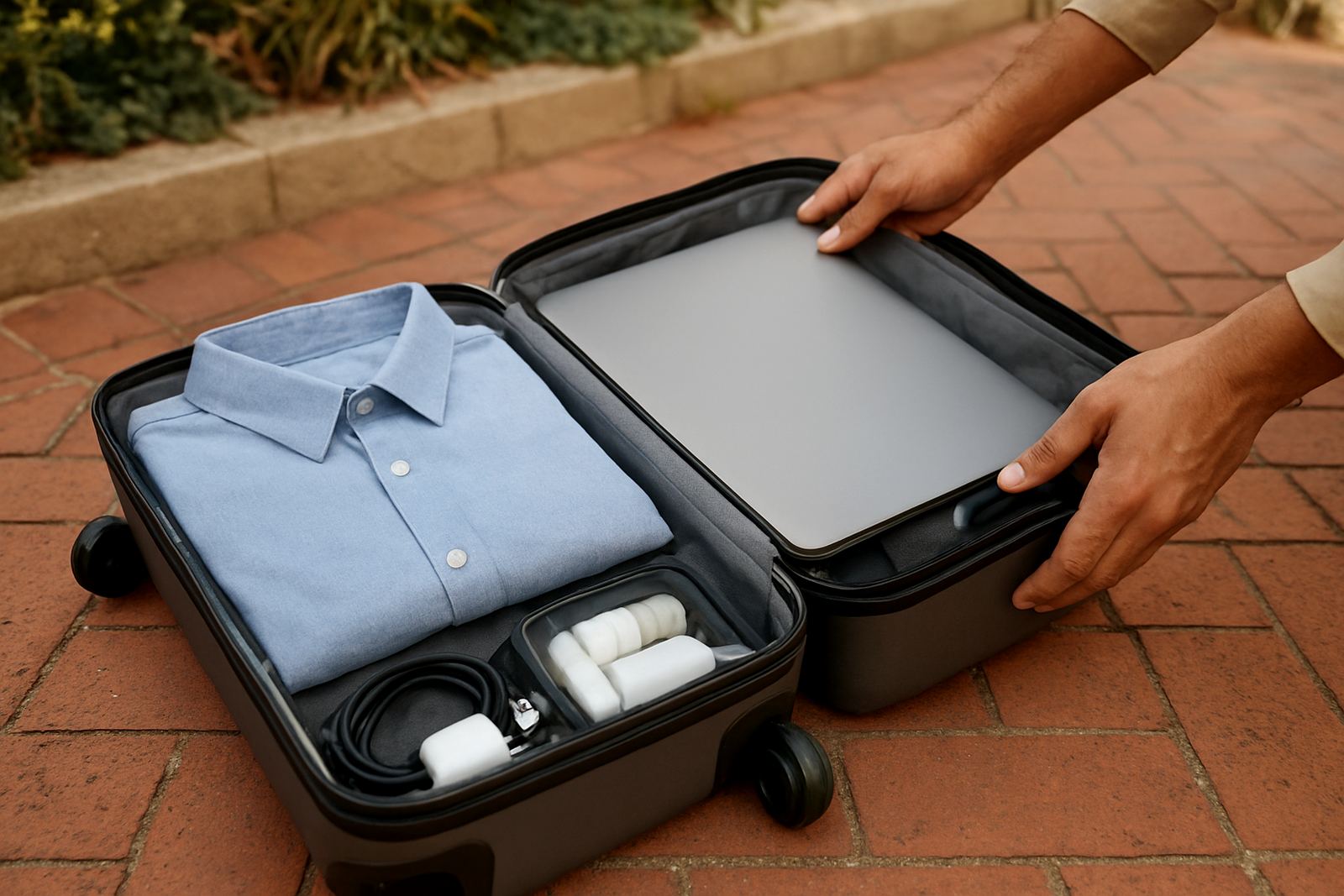
A repeatable packing order takes the pressure out of frequent travel. Start with documents, then electronics, then clothing, then toiletries, and finish with items you need at hand during the journey. This order helps if you are packing in a rush after a long day in the office or before an early morning flight. It also reduces the risk of leaving essentials behind, which can turn a one-night trip into a messy one.
For business travellers who move often between Johannesburg, Durban, Pretoria and Cape Town, consistency matters. If each trip is packed the same way, you know where everything sits when you reach the hotel or the event venue. That is especially helpful when you are managing a full schedule with meetings, dinner bookings and a return flight the next day.
- Documents first so they are easy to reach at security or check-in
- Electronics next, packed with cables together
- Clothing folded or rolled in one section
- Toiletries sealed so they do not leak onto other items
- Daily-use items near the top of the bag
A Local Example: One Night From Sandton to Cape Town
Consider a consultant leaving Sandton on a Monday afternoon for a Tuesday morning client meeting in Cape Town, with a dinner booking the night before. The trip is only one night, but the schedule is tight. The traveller needs one clean outfit for the meeting, something smart enough for dinner, a jacket for the flight and a bag that keeps the laptop, charger and documents together. If there is a late arrival, the hotel check-in should be quick, not a search through three separate bags.
That kind of trip is common for South African business travellers. The point is not to pack more, but to pack better. A short overnight list keeps the work trip neat, lowers the chance of forgotten items and makes it easier to move between airport, hotel and meeting room without fuss. When travel is arranged properly, the bag should support the day, not slow it down.
At Global Flight, we see how much difference a clear itinerary and organised travel support can make. When flights, hotels and event travel are aligned, the traveller can focus on the work, not on what was left at home.