

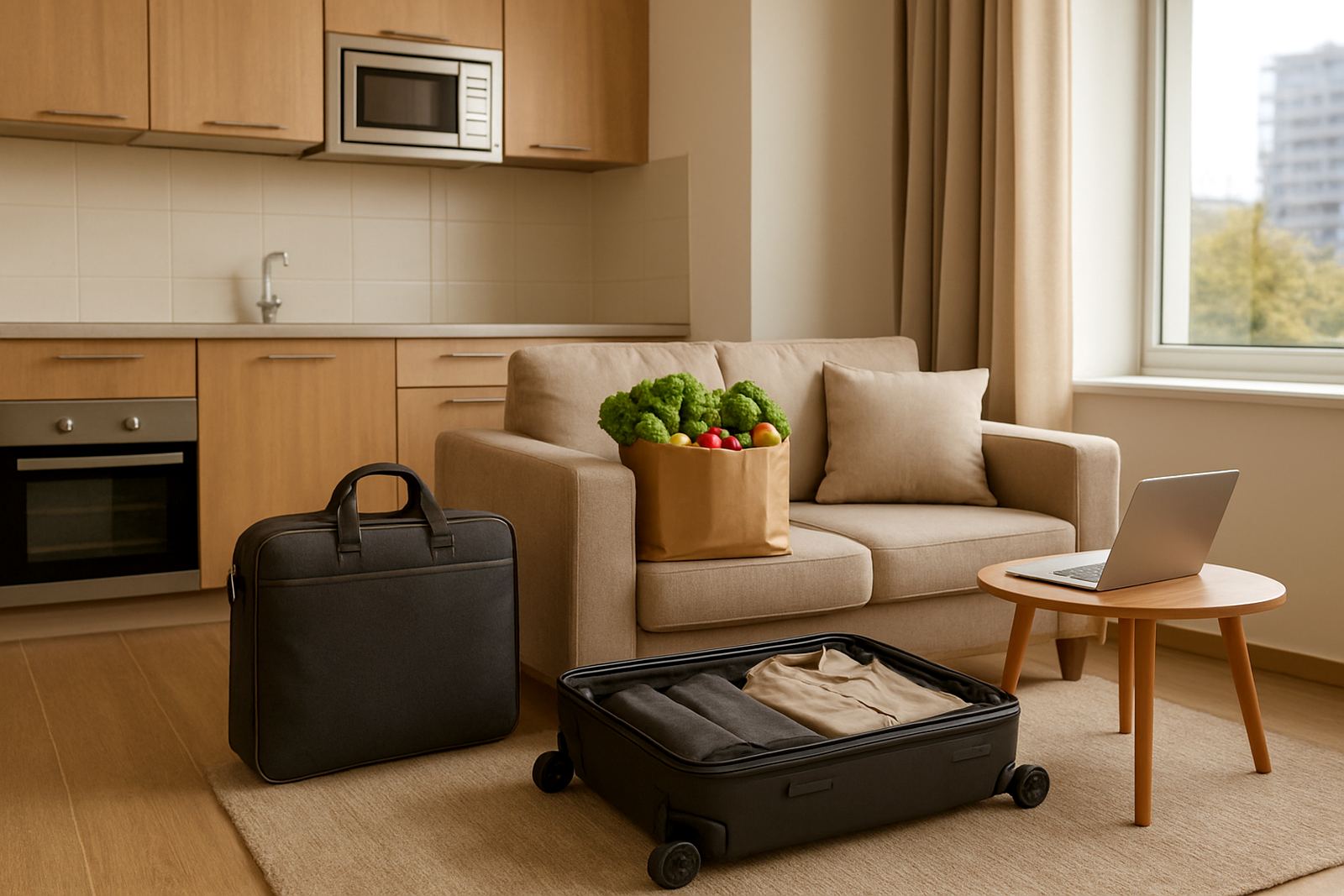
When a hotel room starts to feel too small
For short overnight trips, a standard hotel room is often enough. But once a traveller is staying several days, needs to work late, or has back-to-back meetings across Sandton, Rosebank and Midrand, apartment-style accommodation can be a better fit. There is usually more room to sort paperwork, unpack properly and keep work clothes separate from personal items. That matters when the same person has to look presentable for a client breakfast, a board meeting and an evening dinner all in one week.
Serviced apartments also suit teams travelling on the same project. Instead of booking multiple separate rooms and paying for restaurant meals every night, companies can often get better value with a kitchenette, washing facilities and a living area. It can make budgeting easier too, especially when travel is being approved in advance and every Rand has to be justified. For some companies the difference shows up in travel reports, with fewer meal claims and less pressure on the incidentals line.
What to check before you approve an apartment booking
Not every apartment is suitable for business travel. A unit may look good on paper, but still be awkward for a working stay if the wifi is weak, the parking is limited or the building is noisy at night. The useful questions are practical ones: can the traveller take calls without interruption, is there backup power during load-shedding, and is the location safe for late arrivals after a conference or airport transfer?
- Check the actual distance to the office, venue or airport, not just the suburb name.
- Confirm whether housekeeping is daily or limited to certain days.
- Ask about laundry access, secure parking and visitor rules.
- Find out if the property has generator or inverter support during outages.
- Make sure the booking terms allow changes if meetings move or flights shift.
These details help avoid surprises after arrival. They also matter for duty of care, especially when travellers are in an unfamiliar area and need a clear support plan if something changes at short notice.
How apartment stays affect travel budgets and approvals
Longer stays often work out differently from short trips. A hotel may include breakfast and daily cleaning, but a serviced apartment can reduce the overall cost when the stay stretches to a week or more. The saving is not always obvious at first glance. It may come through lower nightly rates, fewer restaurant meals and less need for separate laundry charges. For finance teams, that can make invoice reconciliation cleaner, because the booking is usually tied to a defined stay period and one property rather than a string of ad hoc extras.
Approval workflow is easier too when the traveller has a clear reason for choosing an apartment. For example, a project manager in Johannesburg who is spending eight nights near Sandton Central for client workshops may need space for documents, a laptop set-up and occasional team check-ins. In that case the accommodation choice can be matched to the actual trip length, which is better than forcing a hotel-only rule on every journey. It saves time for the person booking, and it helps the approver see why the spend makes sense. The numbers should support the trip, not the other way around.
A Sandton example for a week of meetings and venue visits
Take a client team flying into OR Tambo for a week of meetings in Sandton, with one evening event in Rosebank and a supplier visit in Pretoria. A standard hotel room might suit one person for one night, but it can become cramped when files, dress shirts, chargers and presentation material start to pile up. A serviced apartment gives the traveller a place to work quietly, store luggage properly and recover between appointments. It also makes it easier if a colleague needs to drop in for a quick briefing before the next meeting.
In a city like Johannesburg, traffic can turn a short trip into a long one, so accommodation choice is tied to location as much as comfort. A central apartment near the business district can reduce daily travel time and cut down on late arrivals. That can be especially useful when event travel is involved, because delegates may need to move between the venue, airport and hotel with very little room for error. In practice, good accommodation choice supports the whole trip, not just the night’s sleep.
The features that matter most for working travellers
Business travellers do not need every luxury feature. They need dependable basics that support work, rest and movement. A serviced apartment should feel organised and predictable, with enough flexibility for changing schedules and early starts. If a team is arriving from Cape Town, Durban, Pretoria or Gqeberha, the property should be ready for a late check-in and offer clear instructions for after-hours access. That is often where the difference between a smooth stay and a frustrating one starts.
- A proper work surface and a chair that is comfortable for laptop use.
- Reliable internet that can handle video calls and document uploads.
- A kitchen or kitchenette for tea, breakfast and simple meals.
- Secure access, parking and clear building rules.
- Space for two travellers sharing, without feeling cramped.
- Good lighting and blackout curtains for early starts or night shifts.
For coastal travellers, there is another point worth checking: humidity can affect clothes and luggage, so a place with proper ventilation and laundry access is useful. In Durban or Gqeberha, that small detail can make a long stay feel much more manageable.
Getting the booking right from request to check-out
Choosing the right serviced apartment is easier when the travel request includes the full picture. The stay dates, meeting locations, number of travellers, late arrivals, dietary needs and any approval limits all help shape the booking. If a delegate has to attend an event with rooming lists and arrival tracking, the accommodation choice should support that admin rather than add to it. It is also wise to confirm cancellation terms before anything is confirmed, because business plans can change very quickly.
Good travel support also means keeping the paperwork in order. Travel document checks, invoice reconciliation and reporting should be part of the process from the start, not left until the end of the month. When the accommodation fits the itinerary, the traveller can focus on the work at hand and the company has better control over spend. That is the real value of a serviced apartment for business travel: it gives more room, more flexibility and fewer unnecessary delays.